Back
Back All articles
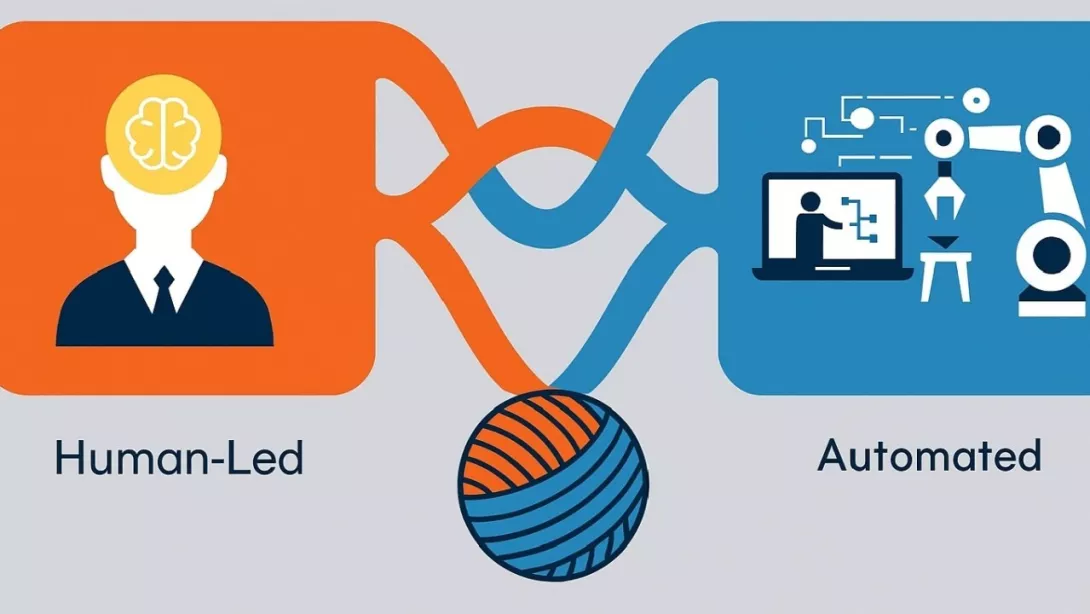
AI can handle transcription, clustering, and synthesis at machine speed. Despite that level of automation, there is space for human intervention as deepest insights still come from human conversations. Humans handle what machines can't read, hesitating, catching tone shifts and sensing what's unsaid, showing that AI-based tools show "substantial potential" in qualitative work. The goal isn't choosing between AI and human moderators, it's integration. The question then becomes, how do we let AI do the mechanical work while humans stay focused on interpretation and empathy? Below are the stages where the plug in can happen
AI can handle transcription, clustering, and synthesis at machine speed. Despite that level of automation, there is space for human intervention as deepest insights still come from human conversations. Humans handle what machines can't read, hesitating, catching tone shifts and sensing what's unsaid, showing that AI-based tools show "substantial potential" in qualitative work. The goal isn't choosing between AI and human moderators, it's integration. The question then becomes, how do we let AI do the mechanical work while humans stay focused on interpretation and empathy? Below are the stages where the plug in can happen.
Planning & Preparation
Before a single participant joins the call, AI can lighten the planning load, drafting questions or guides, proposing follow-ups and refining phrasing. There are tools like that now to help researchers design and moderate interviews with AI assistance. Yet even with these advancements, control must remain with the human researcher. This is important since some aspects like research goals, segment priorities and ethical considerations require human oversight.
As Lumivero's 2025 review notes, AI-driven summarization and coding are only starting points for reflection but not final answers. The best approach is to treat AI as a draftsman, providing structure that the researcher then edits, expands, or discards. In practice, use AI to generate a skeleton guide, then have the moderator review for bias and phrasing before going live. That small human check maintains depth and cultural accuracy especially critical in multilingual or cross-cultural research settings.
Conducting the Interview
Once the session begins, AI becomes the quiet partner in the room. It transcribes, timestamps, and flags potential follow-ups in real time. LOOKA Research is building AI-moderated interviews at scale, while Marvin recently launched an AI interviewer capable of conducting conversations and generating transcripts automatically. Both platforms have room for human intuition. AI misses emotional shifts, hesitation, frustration, and irony that define qualitative richness.
A good moderator reads these cues and pivots instantly. A balanced setup keeps humans in control while AI enhances capacity. The moderator takes the lead while AI handles transcription and follow-up prompts. The moderator decides when to override or adapt AI cues at the moment. This approach blends efficiency with empathy automation amplifying human connection, not replacing it.
Analysis & Synthesis
When it's time to make sense of dozens of transcripts, AI shines. Qualitative tools such as NVivo and ATLAS.ti now use generative AI for theme detection and sentiment clustering. These systems can process hours of conversation in minutes, producing draft summaries and theme maps that help researchers spot early insights. But the final interpretation still belongs to people.
Human analysts must merge, split, or discard AI-generated clusters based on nuance and context. Studies in NLP-assisted interviewing confirm that AI performs best when paired with human reflexivity, it can identify surface-level patterns but not meaning. In one 2024 study on AI conversational agents, researchers found that while AI achieved high accuracy in live-coding responses, it also over-flagged false positives and missed deeper emotional cues. The result reinforces a crucial principle, that AI should never be the final word in interpretation, it's the first draft of understanding.
Reporting & Sharing
Once insights emerge, AI can transform them into polished drafts, executive summaries, slide decks, even draft persona outlines. But storytelling, strategic framing and context demand a human touch. AI lacks the ability to weigh trade-offs or align recommendations with organizational priorities. Researchers should use AI outputs as scaffolding structured, fast but incomplete. The narrative, the why behind the data, remains human territory. Good researchers use AI to save time, not to surrender voice and human sovereignty over the process.
Keeping the Human at the Center
As AI becomes integral to interviews, ethics and accountability must keep pace. Transparency, data protection, and bias mitigation aren't optional, they're fundamental. Always disclose AI use to participants and offer opt-out options, it is respectful. Review AI outputs for cultural or linguistic bias, especially in diverse markets. Human-in-loop isn't a slogan, it's a safeguard. AI systems should be transparent, traceable, and designed to complement human reasoning, not replace it.
The research world is shifting fast. Greylock's 2025 analysis shows AI-native tools lowering the marginal cost of interviews while expanding access to research across teams. For lean teams or startups, AI reduces bottlenecks without diluting rigor. It handles the mechanics, freeing researchers to focus on meaning and strategy. It's not about faster research, rather it's about better research, faster.
Moving forward
Integrating AI into moderated interviews isn't about surrendering human insight, it's about sharpening it. AI frees researchers from cognitive overload, allowing them to listen more deeply and think more strategically. The real innovation lies in hybrid workflows where human sensibility stays central while AI provides speed and scale. AI handles transcription so humans can focus on listening. It clusters data so researchers can interpret meaning. It drafts summaries so teams can tell the right story.
At LOOKA Research, we're building AI-powered tools for African research operations designed for local languages, diverse markets, and real-world agility. Because the future of research isn't a choice between speed and depth it's the power to achieve both. Want to experience how AI-moderated interviews work? Stay tuned as next week we shall be rolling a sign up form, be among the first to explore our platform.